

When people search online, your brand’s first impression is often shaped by your SEO efforts. But SEO isn’t just about ranking high on Google – it’s also how you showcase your credibility and expertise to earn trust. Here’s how SEO helps build trust:
- Visibility: Consistently appearing in search results makes your brand familiar to people, which builds recognition over time.
- Authority: Higher rankings signal expertise and reliability, as Google prioritizes quality content and user experience.
- Optimized Content: Well-structured, fast-loading websites with helpful content create a positive user experience and instill confidence.
Key strategies include using Google’s E-E-A-T framework (Expertise, Experience, Authoritativeness, and Trust), maintaining consistent branding across platforms, and leveraging local SEO to connect with your community. Regularly updating your content, responding to reviews, and monitoring metrics like branded search volume and organic click-through rates can help measure and grow trust over time.
In short, SEO is more than just driving traffic – it’s a way to establish your business as credible and dependable in the eyes of both search engines and users.
Stephen Kenwright – Brand Trust For Visibility in Search & LLMs – IMHO
SEO and Trust Basics
Building trust in SEO is all about mastering the fundamentals that establish your brand’s authority and reliability online.
The E-E-A-T Framework (Expertise, Experience, Authoritativeness, Trustworthiness)
Google’s E-E-A-T framework is a cornerstone for evaluating content quality and website credibility. It focuses on four key elements that influence how both search engines and users perceive your brand’s trustworthiness.
- Expertise: Demonstrating industry knowledge is essential. Your content should reflect a deep understanding of your field, using precise terminology and insights. Highlight team credentials, certifications, and professional backgrounds clearly on your website to reinforce your authority.
- Experience: This refers to hands-on, real-world knowledge. Search engines increasingly value content created by individuals with direct experience – whether that’s using a product, visiting a location, or working in the industry. Share case studies, testimonials, and examples to showcase this practical expertise.
- Authoritativeness: Establishing yourself as a recognized leader in your field takes time and external validation. This could include backlinks from reputable websites, mentions in respected publications, or citations from other experts. Displaying awards, media coverage, and testimonials can further strengthen your position.
- Trustworthiness: This is about the overall reliability of your website and business. Clear contact details, transparent policies, and secure processes are critical. Prominently display privacy policies, terms of service, and security certifications to reassure users.
Think of E-E-A-T as a cohesive system. For instance, a medical website might need to feature doctors with the right credentials (expertise), clinical experience (experience), recognition from medical organizations (authoritativeness), and clear, transparent information about treatments and risks (trustworthiness).
Maintaining Consistent Brand Identity
Consistency across all digital platforms is key to reinforcing your brand’s reliability and professionalism. When users encounter the same messaging, visuals, and tone wherever they find your brand, it builds trust and stability.
- Visual consistency: Use the same logo, color palette, and imagery across your website, social media profiles, and other platforms. For example, your Google Business Profile should mirror your website’s branding, and your social media banners should align with your overall visual identity. This creates a polished and professional impression.
- Message consistency: Stick to the same core values, benefits, and personality across all platforms. If your website highlights personalized service, ensure your social media posts and business descriptions echo that message. Mixed signals can confuse users and weaken trust.
- Tone consistency: Whether it’s a blog post, a social media update, or an email, your communication style should feel uniform. A warm, friendly tone on social media should match the tone of your website and customer support interactions.
- Information consistency: Ensure your business details – such as name, address, phone number, hours of operation, and service descriptions – are identical across all platforms. Even small inconsistencies can hurt your local SEO rankings and confuse potential customers.
Consistency also applies to content quality. Every piece of content, whether it’s a blog post, a social media update, or a business listing, should meet high standards for accuracy and professionalism. Users should feel confident in the information you provide, no matter where they encounter your brand.
Operational consistency matters too. If you’re known for responding to social media messages within two hours, stick to that timeframe. If you publish a blog post every week, maintain that schedule. These small but reliable actions strengthen your brand’s trustworthiness.
Up next, we’ll dive into local SEO strategies to help solidify trust within your community.
Local SEO for Community Trust
Local SEO plays a key role in connecting your business with the local community. When done right, it positions your brand as a friendly neighbor rather than just another business looking to sell something.
Maintaining a consistent local presence tells potential customers that you’re committed to the community. When your business information is accurate and uniform across platforms, it builds trust and boosts local engagement. Plus, this local strategy aligns seamlessly with the broader SEO methods mentioned earlier.
Setting Up Your Google Business Profile
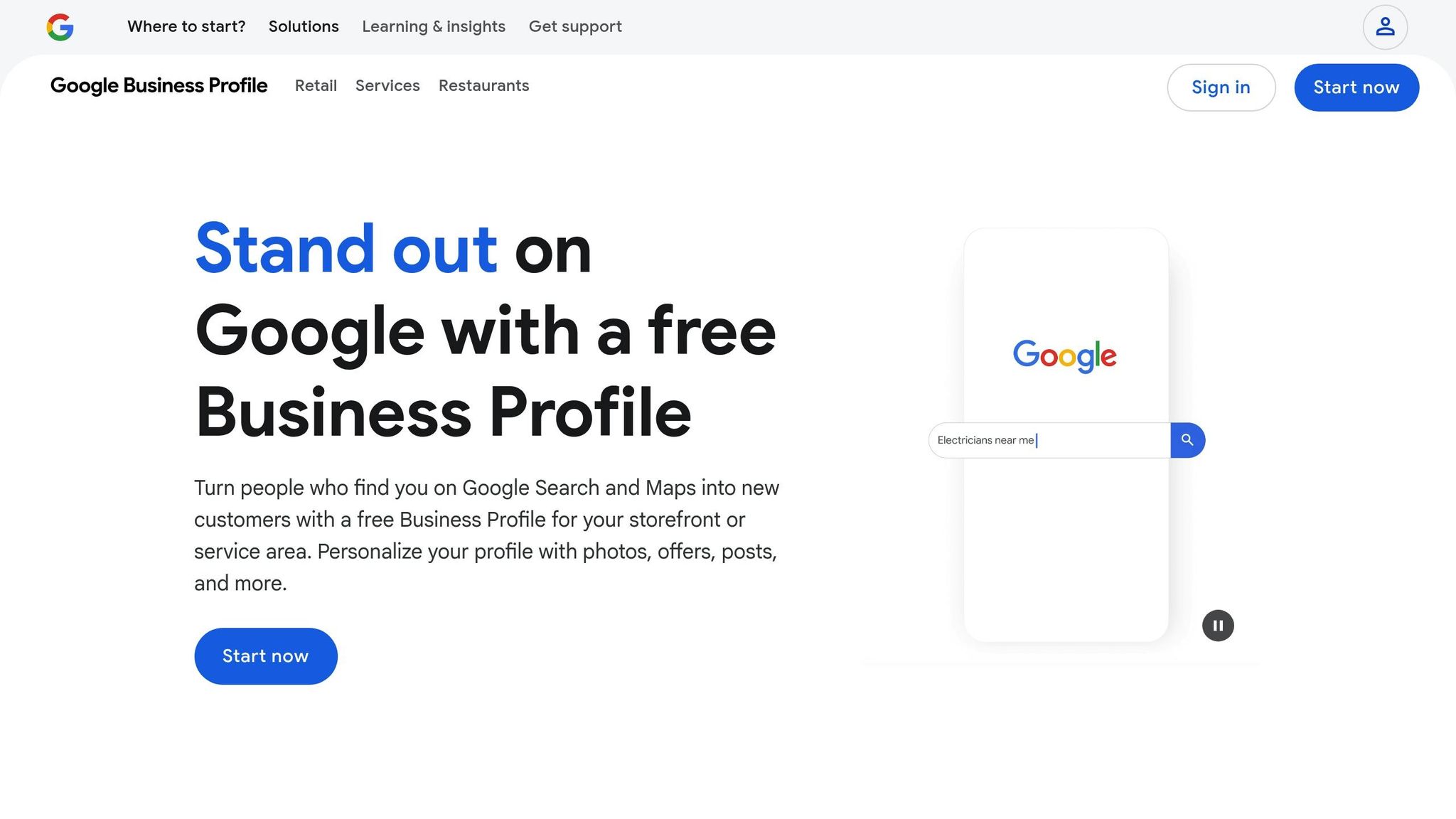
A strong local SEO strategy starts with your Google Business Profile – essentially your digital storefront and often the first impression customers have of your business.
To claim your profile, use Google’s verification process. Simply search for your business name on Google and look for the "Own this business?" link. Verification is typically done via a postcard sent to your address, though phone or email options may be available in some cases.
Fill out every section of your profile with accurate and consistent details. Your business name should match exactly what’s on your storefront and official documents. Include your full address, phone number, and website URL. Even small inconsistencies, like abbreviations, can hurt your local rankings and confuse potential customers.
Keep your business hours up to date, especially during holidays or seasonal changes. Customers who encounter outdated hours may lose trust in your business. Use Google’s special hours feature for holidays like Thanksgiving, Christmas, or New Year’s Day to avoid frustration.
Choose a clear primary category and relevant secondary categories to help Google understand your services. For instance, a pizza restaurant might select "Pizza Restaurant" as the primary category and add "Italian Restaurant" or "Delivery Service" as secondary options. This ensures your business appears in the right search results.
Regularly upload high-quality photos of your storefront, products, and team. Great visuals can grab attention, increase engagement, and encourage more interactions with your profile.
Finally, write a concise and unique business description. Highlight what makes your business special, but avoid stuffing it with keywords – it should feel natural and informative.
Using Customer Reviews and Social Proof
Customer reviews are incredibly influential, shaping not only search rankings but also buying decisions. Many people trust online reviews as much as personal recommendations, making them a powerful tool for building trust in your community.
Encourage happy customers to leave reviews, but do so naturally. A friendly reminder after a positive interaction or a gentle nudge in follow-up emails or on receipts can work well. Avoid being pushy or offering incentives, as this could violate Google’s rules.
Respond to all reviews promptly. Keep responses to positive feedback brief and genuine. For negative reviews, remain professional – acknowledge the customer’s experience and invite them to discuss the issue privately. Handling criticism gracefully can actually enhance your reputation.
Pay attention to trends in your reviews. If several people mention slow service, it might be time to revisit your staffing or operations. On the flip side, if customers frequently praise your friendly team, highlight that in your marketing. Reviews not only influence future customers but also provide insights to improve your business.
To naturally generate more reviews, consider follow-up emails after services, adding review links to invoices, or creating a landing page that directs customers to your Google Business Profile. A steady flow of recent reviews shows Google that your business is active and engaged, which can boost your local rankings. These strategies not only strengthen your local reputation but also set the stage for deeper connections with your community.
sbb-itb-e4c192c
Creating Expert Content That Builds Trust
Crafting expert content is all about understanding what your audience needs and delivering clear, accurate information that helps build long-term trust in your brand. When you consistently provide content that answers user questions effectively, you establish yourself as a reliable resource. Let’s explore practical strategies to align your content with user intent.
Matching Content With User Intent
User intent is at the heart of creating content that resonates and builds trust. Every search query typically falls into one of four categories:
- Informational: Seeking knowledge or answers to questions.
- Navigational: Looking for a specific website or page.
- Transactional: Ready to make a purchase or take action.
- Commercial investigation: Comparing options before making a buying decision.
To match your content with user intent, analyze search results for your target keywords. For example, if someone searches for "best tire repair shop near me", they’re likely looking for local businesses, reviews, and recommendations. Tailor your content to deliver exactly what they need.
Google’s "People Also Ask" section and related searches at the bottom of results pages are great tools for uncovering additional user questions. Use these insights to create content that answers multiple related queries in one piece, making it more comprehensive and useful.
If your target keywords trigger featured snippets, structure your content to provide concise, direct answers. If image results dominate the search, include high-quality, relevant images in your content with descriptive alt text. These strategies not only improve user experience but also strengthen your brand’s authority.
Using Structured Data to Show Expertise
Once your content aligns with user intent, take it a step further by improving its visibility with structured data markup. This markup acts as a bridge between your content and search engines, helping them better understand the details and credibility of your information.
Here are some key types of structured data to consider:
- LocalBusiness schema: Displays essential business details like address, phone number, and operating hours.
- Article schema: Highlights publication dates, authorship, and content sections.
- FAQ schema: Showcases frequently asked questions directly in search results.
- Service schema: Shares details about pricing, availability, and service areas.
- Review schema: Displays ratings and review counts to build trust.
- Organization schema: Establishes your business credentials and contact details.
- Breadcrumb schema: Demonstrates a clear and organized site structure.
To ensure your structured data is implemented correctly, use Google’s Rich Results Test tool. When done right, structured data can boost your click-through rates and reinforce your content’s credibility.
It’s crucial to keep your structured data accurate and reflective of your actual content and business details. Misleading or incorrect markup can not only harm your reputation but also result in penalties from search engines. By combining accurate structured data with user-focused content, you strengthen your brand’s authority and build trust with your audience.
Measuring Trust Through SEO Analytics
Building trust through SEO isn’t a one-and-done effort – it’s an ongoing process that requires regular analytics and adjustments. Once you’ve implemented trust-focused SEO strategies, it’s essential to measure their impact. By keeping an eye on specific metrics and gathering feedback, you can make smarter decisions to strengthen your brand’s credibility.
Key Metrics for Measuring Brand Trust
There are several ways to gauge the trust your brand inspires through SEO, and each metric offers unique insights:
- Branded search volume: This metric tracks how often people search for your business name specifically. A higher branded search volume means people remember your brand and are actively seeking you out. You can monitor this data using tools like Google Search Console and Analytics.
- Organic click-through rates (CTR): High CTRs show that your search listings are compelling and credible enough for users to click. If you’ve updated meta descriptions or added structured data to highlight trust signals, tracking CTR can reveal the impact of those changes.
- Average session duration and pages per session: These metrics reflect how engaged visitors are with your content. When users spend more time on your site and explore multiple pages, it’s a good sign they trust your content. Compare these metrics across different types of content to see what resonates most.
- Return visitor percentage: This metric measures loyalty – return visitors indicate confidence in your brand. When paired with branded search volume, it gives a fuller picture of how trust is growing.
- Review metrics: Reviews are a direct reflection of trust. Keep an eye on your average ratings, review volume, and the speed at which new reviews come in. Platforms like Google Business Profile, industry-specific review sites, and your own website can provide this data.
- Local search visibility: If you’re targeting a local audience, track rankings for trust-related keywords like “trusted [service] near me.” This shows how well you’re building credibility in your community.
- Featured snippet captures: When Google selects your content for a featured snippet, it’s a sign that your information is seen as authoritative and reliable. Monitoring these captures can help you gauge your content’s authority.
These metrics provide a solid foundation for measuring trust, but numbers alone don’t tell the whole story. Qualitative insights add valuable context.
Using Feedback for Continuous Improvement
Quantitative data is important, but pairing it with qualitative feedback can sharpen your strategy. Here’s how to gather and use feedback effectively:
- Customer surveys: Ask your customers directly about their experience finding and evaluating your business online. Questions like “What made you choose us over competitors?” or “Which online touchpoints influenced your decision most?” can uncover valuable insights.
- Social media monitoring: Social platforms are where people share unfiltered opinions. Use tools to track mentions of your business, key team members, or industry topics. Words like “reliable” or “helpful” in these conversations can signal strong trust.
- Website user behavior analysis: Heatmaps and session recordings can show where trust might be faltering. For instance, if users frequently exit your site after viewing your “About” page or pricing details, those areas might need improvement.
- Search query analysis: Google Search Console can reveal what people are searching for when they find your site. An increase in searches for terms like “[your business name] reviews” or “complaints” could indicate curiosity – or concern – about your trustworthiness.
- Competitor analysis: Study how competitors are earning trust. Look at their reviews, featured snippets, and local search visibility. This isn’t about copying them but understanding what trust signals matter most in your industry.
- Content audits: Outdated information can quickly erode trust. Review your expertise-focused content regularly to update stats, refresh examples, and showcase any new achievements or credentials. This is especially critical in industries where facts and trends change rapidly.
Bringing all this data together is key. Set up monthly reporting dashboards that combine metrics like search rankings, reviews, and traffic with qualitative insights like customer feedback and review sentiment. This comprehensive view helps you spot issues early and double down on what’s working.
Trust takes time to build but can be lost in an instant. By staying proactive with these analytics and feedback tools, you can catch potential problems before they grow and ensure your SEO efforts continue to support both search engine rankings and long-term brand credibility.
Conclusion: Using SEO for Long-Term Brand Trust
Establishing brand trust through SEO isn’t a quick fix – it’s a long-term commitment. Successful campaigns have shown that combining genuine storytelling with data-backed strategies can significantly increase engagement and help retain customers over time. These combined efforts not only enhance credibility but also provide actionable insights for ongoing improvement.
What sets leading brands apart is their ability to use data effectively. Metrics such as branded search volume, organic click-through rates (CTR), and customer review sentiment reveal how much trust your brand commands. A drop in session duration or negative shifts in review ratings can act as early warning signs. On the flip side, growth in branded searches or securing featured snippets are clear indicators that your authority is on the rise. With this data, you can address potential issues before they erode trust.
As digital standards continue to evolve each year, so do expectations for quality and reliability. Brands that fail to see the connection between SEO and trust-building risk falling behind. Technical SEO improvements make your website more reliable for users. High-quality, authoritative content builds confidence with search engines. Local SEO efforts create a sense of trust within your community that can ripple outward.
To execute these strategies effectively, consider working with experts. At The Harman Media & Marketing Group, we take an integrated approach to SEO and brand development, helping businesses build trust that lasts in today’s competitive digital landscape.
FAQs
What is the E-E-A-T framework, and how does it influence a brand’s SEO strategy?
The E-E-A-T framework – which stands for Experience, Expertise, Authority, and Trustworthiness – is a cornerstone of any solid SEO strategy. It helps search engines assess the quality and reliability of a website, encouraging brands to produce content that meets Google’s high standards for trustworthy and authoritative information.
When your brand consistently showcases strong E-E-A-T signals, it builds trust not just with users but also with search engines. While these signals might not instantly catapult your rankings, they enhance your site’s visibility over time by reinforcing its credibility – a critical factor for achieving lasting SEO success.
How can I ensure my brand stays consistent across digital platforms to build trust?
To keep your brand consistent across all digital platforms and establish trust with your audience, start by creating detailed brand guidelines. These should clearly define your visual identity, messaging, and tone of voice. Think of these guidelines as the go-to manual for anyone involved in content creation or marketing – ensuring everything stays aligned, no matter the platform.
When your visuals, tone, and messaging stay consistent at every customer touchpoint, it strengthens both brand recognition and credibility. To make this happen, regular team training and open communication are key. By keeping everyone on the same page, you’ll build a brand image that feels cohesive and dependable.
How can local SEO help build trust with your community?
Local SEO is a powerful way to establish trust within your community by showcasing your connection to the area. A great place to start is by fine-tuning your Google Business Profile. Make sure your contact information, business hours, and location are accurate, and upload high-quality photos that represent your business well. This profile is often the first impression potential customers have of you, so keeping it polished is key.
Encouraging happy customers to leave positive reviews is another step that can significantly boost your credibility. Reviews act as social proof, letting others know your business is reliable and valued by the community.
You can also create locally-focused content to deepen your ties to the area. For example, write blog posts about nearby events or collaborate with local organizations. These efforts show that you’re not just a business but an active participant in the community.
Finally, make it easy for people to find and connect with you. Use local keywords in your website content and embed Google Maps to clearly display your location. These small but impactful steps reinforce your role as a trusted, accessible part of the neighborhood.


