

Automated A/B testing tools simplify marketing experiments by using AI and machine learning to handle tasks like audience segmentation, variation creation, and result analysis. These tools save time, reduce errors, and help businesses make data-driven decisions faster. Key features to look for include integration with other platforms, automation capabilities, and robust reporting. Here’s a quick look at 8 top tools:
- Userpilot: Best for user onboarding; starts at $249/month.
- VWO: Ideal for small businesses; starts at $199/month.
- Optimizely: Enterprise-focused; pricing starts at $50,000/year.
- AB Tasty: Mid-market option with AI-driven features; starts at $1,000/month.
- Adobe Target: Enterprise-level with strong Adobe integration; custom pricing.
- Dynamic Yield: Great for e-commerce; custom pricing.
- Kameleoon: AI-powered with strong privacy focus; starts at ~$490/month.
- Convert: Budget-friendly with solid features; starts at $299/month (annual).
Quick Comparison:
| Tool | Starting Price | Best For | Key Features |
|---|---|---|---|
| Userpilot | $249/month | User onboarding | Behavioral triggers, real-time dashboards |
| VWO | $199/month | Small businesses | SmartStats, auto-pause |
| Optimizely | $50,000/year | Enterprises | AI insights, advanced targeting |
| AB Tasty | $1,000/month | Mid-market companies | AI segmentation, real-time optimization |
| Adobe Target | Custom | Large enterprises | AI personalization, Adobe integration |
| Dynamic Yield | Custom | E-commerce | Auto-optimization, predictive targeting |
| Kameleoon | ~$490/month | Privacy-focused users | AI traffic adjustment, GDPR compliance |
| Convert | $299/month | Budget-conscious users | QA Wizard, Multi-Arm Bandit |
For businesses in the U.S., balancing cost, ease of use, and features is key when selecting the right tool. Each platform caters to different needs, from startups to large enterprises.
We Evaluated the Top A/B Testing Software Tools To Help You Decide
How to Choose Automated A/B Testing Tools
When selecting automated A/B testing tools, integration should be at the top of your checklist. Tools that seamlessly connect with your CMS, analytics platforms, and marketing software allow for unified data streams, making testing smoother and more efficient.
Why does integration matter so much? Teams that adopt integrated solutions often see a dramatic boost in their testing capabilities. For instance, some have managed to triple their testing frequency – going from 60 tests a year to more than 200. On top of that, integration can slash the time it takes to launch regional campaigns by up to 83%.
A solid integration strategy also simplifies campaign rollouts by reducing technical hurdles. Take CustomerLabs as an example. In April 2025, they cut their optimization cycles by 65% by combining session replay analysis with quantitative metrics. Using a Headless CMS (Payload CMS) alongside an Experiment Platform (Statsig), they quickly pinpointed the most effective variants for their campaigns.
Deep third-party integrations are another must-have. The best platforms on the market, like VWO, connect with over 40 tools, including Google Analytics, WordPress, and Shopify. Similarly, Optimizely, Adobe Target, and Kameleoon offer advanced integration capabilities, allowing you to centralize customer data, refine audience segmentation, and improve reporting.
At the end of the day, look for A/B testing tools that offer robust targeting options and act as a comprehensive solution for conversion rate optimization. An integrated setup not only simplifies your workflow but also equips you to make smarter, data-driven decisions. Ready to dive in? Check out the top automated A/B testing tools in the next section.
1. Userpilot
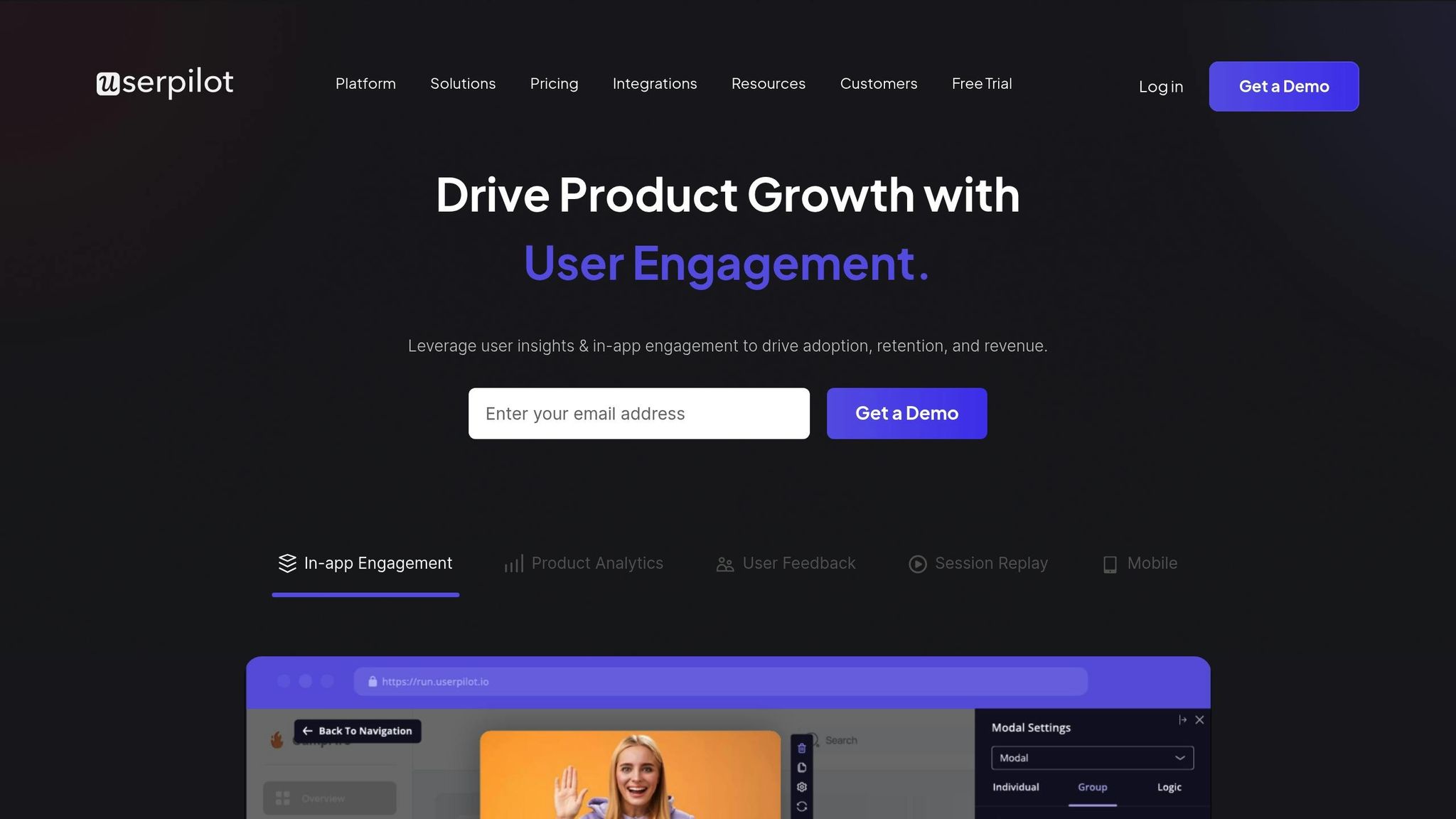
Userpilot is a product growth platform designed to streamline user onboarding while offering powerful A/B testing tools. Its automation features stand out, making it a go-to choice for improving user engagement and driving conversions efficiently.
Automation Capabilities
Userpilot’s automation engine is built around behavioral triggers and user segmentation. It creates user cohorts automatically based on actions, demographics, or engagement levels. Once you define your test parameters, the platform handles the rest, delivering tailored experiences to users without requiring manual adjustments.
For instance, it enables contextual testing by displaying onboarding flows, feature updates, or UI elements that align with specific user journeys. You could, for example, set up automated tests to show different welcome sequences based on traffic sources or subscription tiers.
Its goal-based automation ensures that tests are paused or traffic is redirected once conversion goals are met. This feature helps you avoid wasting time on underperforming variants, allowing you to focus on strategies that yield better results.
Integration with Other Platforms
Userpilot doesn’t just stop at automation – it integrates seamlessly with other tools to expand its capabilities. It connects directly with platforms like Google Analytics, Mixpanel, and Amplitude, enabling you to track test outcomes alongside your existing analytics without juggling multiple dashboards.
Additionally, it works with HubSpot, Salesforce, and Intercom, allowing you to segment users based on CRM data and sync test results back to customer profiles automatically.
The platform also supports Zapier, opening the door to hundreds of potential integrations. For example, you can trigger actions in other tools based on test results or specific user behaviors, making your workflows even more dynamic.
Reporting and Analytics
Userpilot provides real-time dashboards that visually display test performance metrics, including conversion rates, engagement statistics, and user progression data.
One standout feature is its statistical significance calculations, which are built into every test report. This ensures you have enough data to make informed decisions. Reports also include confidence intervals and highlight when a test reaches statistical significance.
Another valuable tool is cohort analysis, which tracks how different user segments respond to tests over time. This helps you uncover long-term trends and impacts that go beyond immediate conversion rates.
Pricing in USD
Userpilot uses a monthly active user (MAU) pricing model with three tiers:
- Starter Plan: Starts at $249 per month for up to 2,000 MAUs. This plan includes basic A/B testing features and essential onboarding tools.
- Growth Plan: Priced at $499 per month for up to 2,000 MAUs, offering advanced segmentation, goal tracking, and enhanced automation features.
- Enterprise Plan: Custom pricing tailored to your needs, featuring dedicated support, advanced integrations, and white-label options.
All plans include unlimited team members and tests. Pricing adjusts based on usage, so you only pay for the users who interact with your tests.
2. VWO
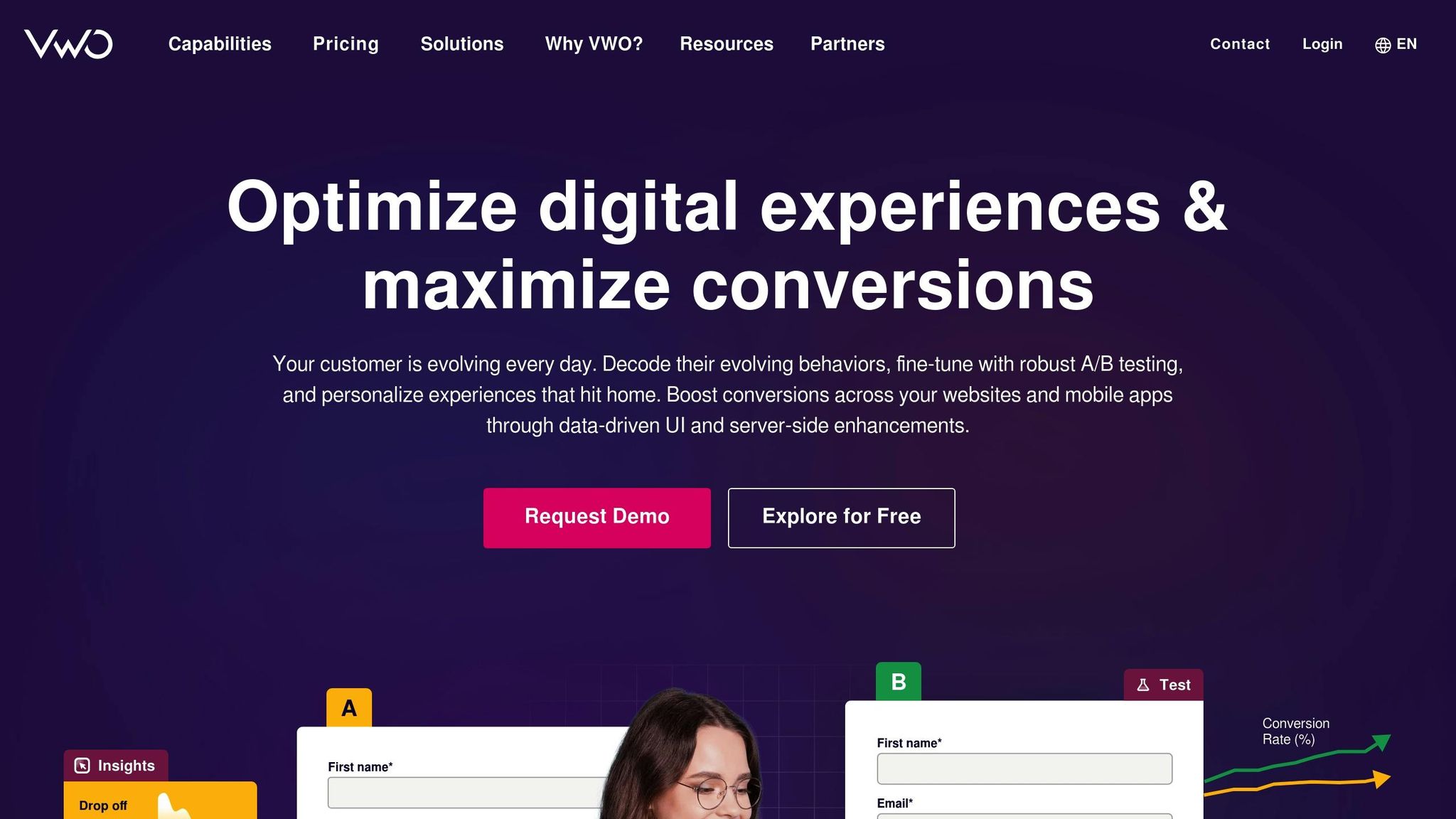
VWO (Visual Website Optimizer) is a conversion optimization platform designed to simplify A/B testing for websites and mobile apps. With its user-friendly visual editor and automation tools, VWO makes it possible for businesses to conduct advanced tests without needing deep technical expertise.
Automation Capabilities
At the heart of VWO’s automation features is SmartStats, a proprietary statistical engine that tracks tests in real time. This algorithm automatically pauses underperforming variations, saving valuable traffic. Features like auto-pause and multivariate testing automation ensure traffic isn’t wasted on losing variants, even during complex tests involving multiple elements.
Another standout feature is behavioral targeting automation, which segments visitors based on actions, such as time spent on a page, and adjusts test delivery accordingly. By analyzing user behavior patterns, VWO triggers tailored test experiences in real time, enhancing the relevance of each test.
These automation capabilities integrate seamlessly with other marketing tools, creating an efficient testing workflow.
Integration with Other Platforms
VWO connects effortlessly with popular platforms like Shopify, Magento, WooCommerce, HubSpot, Marketo, and Pardot. Its integration with Google Analytics allows you to consolidate data for a clearer picture of your optimization efforts.
For e-commerce, VWO supports automated tests on product pages, checkout processes, and cart recovery flows. These integrations sync product and customer data automatically, enabling more precise test targeting.
In marketing automation, VWO can trigger actions like email campaigns or lead nurturing sequences based on test participation and results. This creates a cohesive optimization system across your marketing funnel.
For businesses needing custom setups, VWO’s API integration allows connections to internal tools and databases. Many enterprises use this to feed test results into business intelligence systems or to enable personalization rules within content management systems.
Reporting and Analytics
VWO’s real-time dashboards provide insights into critical metrics like statistical significance, revenue impact, and user interaction heatmaps. The revenue impact tracking feature calculates how much additional revenue each winning variation generates, giving you a clear view of the financial benefits of your tests.
The platform also offers cohort-based reporting, which tracks how different user groups – such as new visitors, returning customers, or mobile users – respond to tests over time. This helps refine strategies by understanding how specific segments interact with variations.
Pricing in USD
VWO’s pricing is based on a monthly tracked user (MTU) model, with three main tiers:
- Starter Plan: $199/month for up to 10,000 MTUs, including basic A/B testing, heatmaps, and standard integrations.
- Growth Plan: $490/month for up to 10,000 MTUs, adding advanced targeting, multivariate testing, and priority support.
- Enterprise Plan: Custom pricing starting around $1,000/month, offering dedicated account management, advanced security, and unlimited testing.
All plans include unlimited tests and team members. Additional MTUs are available at discounted rates based on volume, and annual billing offers savings of up to 20% across all plans.
3. Optimizely
Optimizely offers powerful tools for seamless integration through pre-built connectors, public APIs, and SDKs. These features simplify automated test management across marketing platforms, allowing for real-time adjustments and smoother campaign performance. By syncing audience data and triggering personalized user experiences based on behavior, the platform makes setting up automated tests more efficient. This integration also ensures that successful test variations receive increased traffic immediately, streamlining deployment and adjustments. With its focus on automation, Optimizely enhances test iterations to help boost conversion rates effectively.
4. AB Tasty
AB Tasty takes a smart, AI-focused approach to A/B testing, allowing teams to design, manage, and refine experiments with ease. By using artificial intelligence, the platform simplifies the testing process from start to finish.
Automation Capabilities
AB Tasty uses AI to handle essential parts of the testing process. For example, it employs advanced Thompson Sampling to automatically direct traffic toward the best-performing variation. Its GenAI Visual Editor Copilot lets users create or modify experiences using simple natural language commands, making adjustments quicker and more intuitive.
The platform also excels in segmentation. EmotionsAI groups visitors based on their emotional needs, while Engagement Segments classifies users into categories like Loyal, Valuable, Wanderers, or Disengaged. By analyzing browsing patterns, AB Tasty delivers personalized content and product recommendations in real-time, using a combination of product data and customer behavior insights. This approach reflects how AI is transforming testing into a more efficient and tailored process.
These automation tools not only simplify workflows but also pave the way for more insightful performance analysis.
Reporting and Analytics
To complement its automation features, AB Tasty offers AI-powered reporting tools. These features automatically generate insights from test results, cutting down the time typically spent on manual data analysis. The platform delivers clear, actionable analytics, ensuring teams can focus on applying what they’ve learned rather than getting bogged down in the details.
sbb-itb-e4c192c
5. Adobe Target

Adobe Target is a robust A/B testing tool that’s part of the Adobe Experience Cloud. It’s designed to seamlessly connect testing data across various marketing and analytics platforms, making it a powerful choice for enterprise-level optimization.
Integration with Platforms
Adobe Target works hand-in-hand with Adobe Analytics through the A4T integration, using the at.js and appmeasurement.js libraries to enable direct measurement and reporting. It also streams real-time data to mParticle, covering Custom Events, Commerce Events, User IDs, and Device IDs. Additionally, Adobe Target feeds data into the Adobe Experience Platform as datasets for Customer Journey Analytics, helping teams build detailed data views and reports in Analysis Workspace. For content personalization, it integrates directly with Adobe Experience Manager, ensuring tailored user experiences across channels.
6. Dynamic Yield
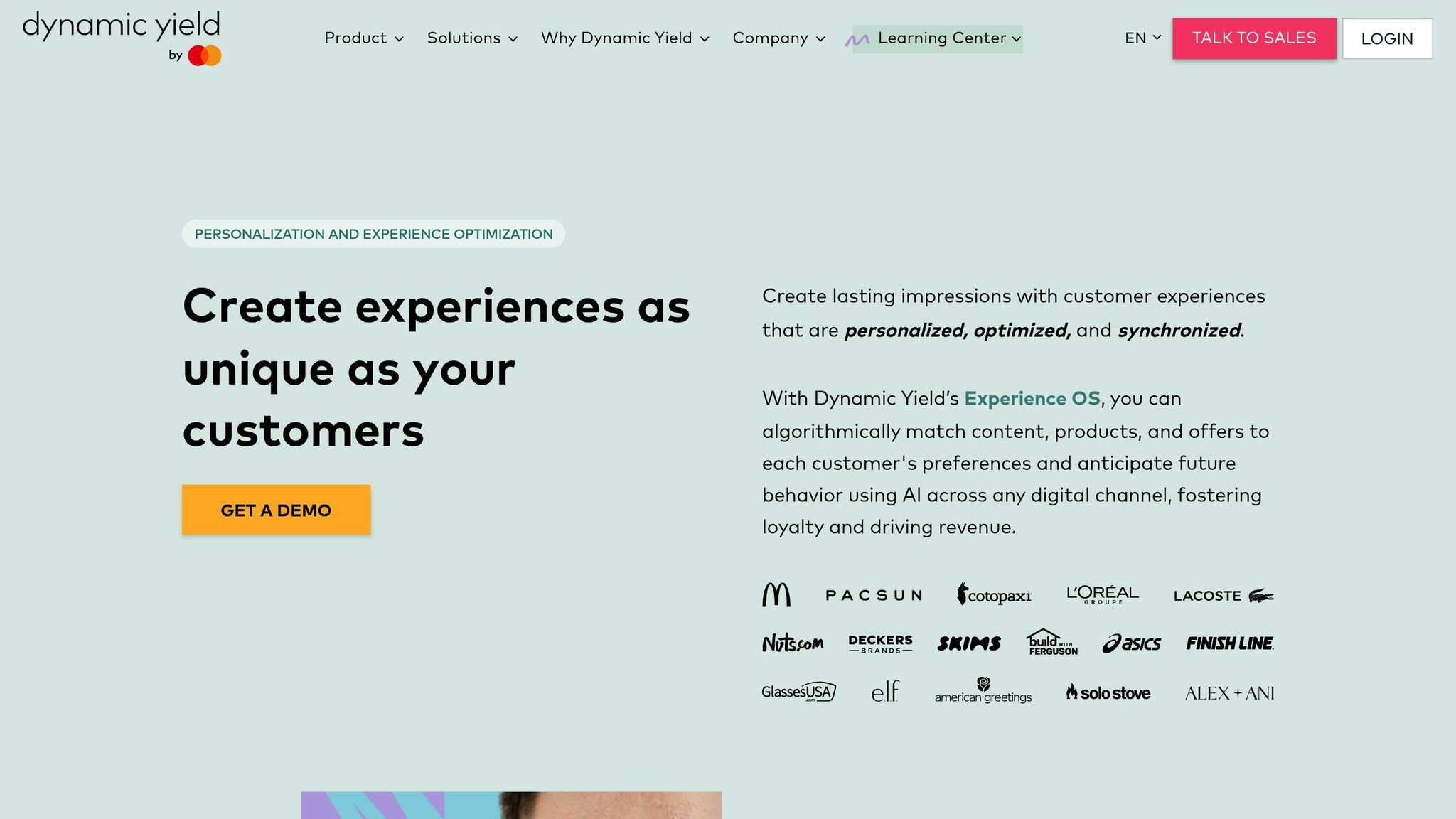
Dynamic Yield is an AI-driven platform designed to enhance web, mobile, and email experiences through a combination of A/B testing and machine learning. Here’s a closer look at how its automation tools, platform integrations, and analytics make optimization more efficient.
Automation Capabilities
Dynamic Yield leverages algorithms that continuously learn and adapt. Its Auto-Optimize feature automatically adjusts traffic to favor the best-performing variations, eliminating the need for manual adjustments. Meanwhile, the Smart Allocation system uses multi-armed bandit algorithms to boost conversions throughout the testing process.
The platform’s Experience OS segments users automatically, analyzing behavior, demographics, and contextual data to deliver personalized experiences tailored to each group. It also simplifies running multiple tests at once by managing traffic distribution and ensuring statistical significance without user intervention.
Integration with Platforms
Dynamic Yield integrates effortlessly with major e-commerce platforms like Shopify, Magento, Salesforce Commerce Cloud, and WooCommerce. It also connects with leading analytics tools such as Google Analytics, Adobe Analytics, and Mixpanel using pre-built connectors.
For email marketing, the platform works with tools like Klaviyo, Mailchimp, and SendGrid, extending personalization beyond just your website. Additionally, it integrates with customer data platforms like Segment and mParticle, enabling businesses to use existing customer profiles for more precise testing and personalization.
Reporting and Analytics
Dynamic Yield offers real-time dashboards that track essential metrics like conversion rates, revenue per visitor, and engagement. The platform’s analytics engine calculates statistical significance automatically, providing confidence intervals for each variation to support faster, data-backed decisions.
Advanced reporting features include cohort analysis, funnel visualization, and revenue attribution, which pinpoints the exact revenue impact of each test. It also includes predictive analytics to estimate potential outcomes before running a test, helping teams prioritize experiments with the most potential.
Pricing in USD
Dynamic Yield’s pricing is customized based on monthly traffic and specific feature requirements. Entry-level plans start around $2,000 per month, while mid-tier plans range from $5,000 to $15,000 monthly. Enterprise-level plans can exceed $25,000 per month. All plans include unlimited tests and users, with costs scaling based on the number of unique visitors and the complexity of personalization needed.
7. Kameleoon
Kameleoon earns its place among the top automated A/B testing tools with its AI-powered features and smooth integrations. It’s designed to simplify testing and experimentation, catering to users with varying technical expertise.
Automation Capabilities
Kameleoon’s AI-driven engine takes the guesswork out of testing by identifying the best-performing variations and adjusting traffic in real time. Its smart traffic distribution leverages advanced statistical models to deliver faster, more reliable results. Features like automatic pausing and predictive targeting help optimize experiments right from the start.
The platform also includes built-in quality assurance checks to catch potential issues – such as JavaScript errors, layout glitches, or performance inconsistencies – before tests go live. These checks ensure that experiments run smoothly across different devices and browsers, making the process as efficient as possible.
Integration with Platforms
Kameleoon’s integrations make it easy to connect with the tools you’re already using. It works seamlessly with major e-commerce platforms like Shopify Plus, Magento Commerce, BigCommerce Enterprise, and Salesforce Commerce Cloud. For analytics, it integrates with Google Analytics 4, Adobe Analytics, and Mixpanel, allowing test data to flow directly into your existing reporting systems.
When it comes to customer data and audience targeting, Kameleoon supports tools like Segment, Tealium, Google Tag Manager, and Adobe Launch. Marketing teams can also benefit from integrations with platforms such as HubSpot, Marketo, and Pardot, while customer support systems like Zendesk and Intercom enable testing of support-related interactions. These connections make it easier to use test insights across various operational areas.
Reporting and Analytics
Kameleoon provides real-time dashboards that track key metrics like conversion rates, statistical significance, and revenue impact. Its revenue impact calculator helps businesses understand the financial value of each test variation. Advanced reporting tools, including segment performance analysis, test timelines, and a Bayesian statistics engine, offer deeper insights into experiment outcomes. Additionally, multi-goal tracking lets teams monitor multiple key performance indicators without sacrificing accuracy.
Pricing
Kameleoon offers tiered pricing based on the number of monthly unique visitors and the features you need. Their plans are designed to accommodate businesses of all sizes, from small-scale operations to large enterprise websites. For specific pricing details and to find the best plan for your needs, it’s best to reach out to Kameleoon directly.
8. Convert
Convert is a robust A/B testing platform that combines enterprise-level capabilities with pricing designed to fit tighter budgets. It’s a go-to choice for businesses that want to optimize their testing efforts without overspending.
Automation Capabilities
Convert simplifies testing with built-in tools like SRM checks and an automated QA Wizard. The QA Wizard scans experiments for common issues – such as JavaScript errors or visual glitches across browsers and devices – helping teams avoid manual quality assurance and reducing the risk of test flaws. Additionally, the platform supports automated version rollouts, ensuring a smooth transition from experimental phases to full implementation.
For users on the Pro plan, Convert includes Multi-Arm Bandit (Auto-Allocate), which redirects traffic to the best-performing variants during tests. This feature can help boost conversion rates even before the experiment concludes.
Integration with Platforms
Convert integrates effortlessly with major analytics and marketing tools. It connects directly to Google Analytics and Adobe Analytics, and supports Google Tag Manager for easier deployment. The platform also works with customer data platforms and e-commerce systems, allowing businesses to tap into their existing customer segments and behavioral insights for sharper, more effective testing.
For development teams, Convert offers advanced Full Stack and Feature Flags capabilities (available in the Pro and Enterprise plans). These features enable server-side testing and gradual feature rollouts, making it easier to sync with ongoing development workflows.
Reporting and Analytics
Convert provides real-time reporting with the ability to track multiple goals at once. The Growth plan supports up to 30 active goals per project, while the Pro plan increases that limit to 100. Its sequential testing approach ensures reliable results by accounting for scenarios that might otherwise skew data.
Advanced reporting features include raw data export, change history tracking, and data point filtering. These tools give analysts the flexibility to dig deeper into results and tailor reports for various stakeholders.
Pricing in USD
Convert offers three pricing tiers to suit different needs:
| Plan | Monthly Price | Annual Price | Tested Users/Month | Active Projects | Key Features |
|---|---|---|---|---|---|
| Growth | $399/mo | $299/mo (billed annually) | 100K | 5 | A/B Testing, Advanced Targeting, SRM Check, QA Wizard |
| Pro | $599/mo | $420/mo (billed annually) | 100K | 30 | All Growth features plus Multivariate Testing, Multi-Page Testing, Full Stack, Phone Support |
| Enterprise | Custom pricing | Annual only | 1M+ | Unlimited | All Pro features plus dedicated account management, custom terms |
The Growth plan, priced at $399 per month (or $299 when billed annually), is ideal for smaller businesses. It supports 100,000 tested users monthly, five active projects, and essential features like A/B testing and behavioral targeting.
The Pro plan, at $599 per month (or $420 with annual billing), is better suited for companies running more complex experiments. It adds multivariate and multi-page testing, along with phone support, while keeping the same user limits.
For larger enterprises handling over a million tested users monthly, Convert offers a customized pricing tier. This plan includes unlimited projects, dedicated account management, and tailored contract terms.
Convert also provides a 15-day free trial for the Growth and Pro plans – no credit card required – and offers discounts for multi-year commitments.
"We first started using Convert in 2016 and have built and run hundreds of tests using the tool. We originally selected Convert as it offers an outstanding feature set at a very reasonable price – and since then we have been hugely impressed. In the 8 years we’ve worked with Convert, I’ve never wanted to consider another platform. The support from the Convert team is incredible. Someone responds within minutes (at any time of day) and can actually solve problems and find answers."
- Dave Gowans, CEO of BrowserToBuyer
Convert also stands out for its commitment to pricing stability. Legacy price protection ensures that existing customers won’t face sudden price hikes or forced upgrades, making it a dependable choice for businesses focused on long-term testing strategies.
Tool Comparison Chart
Here’s a quick look at eight popular automated A/B testing platforms, highlighting their pricing, key features, and pros and cons.
| Tool | Starting Price (USD) | Best For | Key Automation Features | Pros | Cons |
|---|---|---|---|---|---|
| Userpilot | $249/mo | Product teams, user onboarding | Auto-triggering, behavioral targeting, smart recommendations | Focused on user experience, excellent onboarding tools | Limited to web apps, higher learning curve |
| VWO | $199/mo | Small to medium businesses | SmartStats, auto-pause, traffic allocation | Easy to use, solid customer support | Add-ons can get pricey, limited customization |
| Optimizely | $50,000+/year | Enterprise organizations | AI-powered insights, auto-allocation, advanced targeting | Powerful enterprise features, highly scalable | Very expensive, complex setup |
| AB Tasty | $1,000/mo | Mid-market companies | AI recommendations, auto-segmentation, real-time optimization | Strong personalization and analytics | Higher cost, steep learning curve |
| Adobe Target | Custom pricing | Large enterprises using Adobe | Auto-Target, AI-driven personalization, automated allocation | Seamless Adobe integration, advanced AI tools | Expensive, requires Adobe expertise |
| Dynamic Yield | Custom pricing | E-commerce and retail | Machine learning optimization, auto-personalization, predictive targeting | Great for e-commerce, advanced ML features | Complicated setup, high cost |
| Kameleoon | €450/mo (~$490/mo) | European businesses, privacy-focused companies | AI-powered optimization, auto-segmentation, predictive analytics | Strong GDPR compliance, excellent European support | Limited US presence, fewer integrations |
| Convert | $299/mo (annual) | Budget-conscious businesses | SRM checks, QA Wizard, Multi-Arm Bandit | Affordable, stable pricing, great support | Lacks advanced enterprise features |
The table outlines the essentials, but the following details dive deeper into budget, support, and usability for US-based businesses.
Budget Considerations for US Businesses
For startups and small businesses, VWO’s $199/month pricing is a practical choice, while Convert offers solid value at $299/month (annual plan). Mid-sized companies may find AB Tasty’s $1,000/month pricing reasonable for its robust features. On the higher end, enterprise solutions like Optimizely and custom-priced platforms such as Adobe Target and Dynamic Yield cater to organizations with larger budgets and complex needs.
US Compliance and Support
Platforms like Optimizely, Adobe Target, and VWO offer reliable US-based support, making them a good fit for businesses operating in the United States. Convert is also praised for its fast response times. Meanwhile, Kameleoon, while emphasizing strong privacy protections rooted in its European origins and GDPR compliance, may pose challenges for US businesses due to its European-based support hours, which could result in occasional delays.
Feature Complexity vs. Usability
When it comes to balancing complexity and ease of use, VWO and Convert stand out for their straightforward setup, allowing marketing teams to get started without heavy technical involvement. Tools like Userpilot, AB Tasty, and Kameleoon strike a balance, offering advanced features with accessible interfaces suited for teams looking for flexibility. In contrast, enterprise-grade platforms such as Optimizely, Adobe Target, and Dynamic Yield come with deep analytics and powerful automation but require more technical expertise and have a steeper learning curve.
This breakdown helps clarify how these A/B testing platforms can fit into your digital marketing strategy, making it easier to choose the right tool for your business needs.
Conclusion
Choosing the right automated A/B testing tool can make a huge difference in your digital marketing efforts. The eight platforms mentioned cater to a variety of needs, from budget-friendly options to robust tools designed for large-scale operations.
For agencies, the key is finding a tool that integrates seamlessly with their workflows. This ensures smoother processes and better results.
For agencies in the U.S., balancing cost and functionality is crucial. Affordable tools can handle basic testing needs, while premium platforms offer advanced features that simplify testing and enhance overall performance.
With the right platform, agencies can move beyond one-off experiments and build comprehensive optimization strategies. This shift not only improves campaign outcomes but also strengthens client relationships by delivering clearer, measurable ROI.
FAQs
How do AI and machine learning enhance automated A/B testing tools for marketing experiments?
AI and machine learning bring a new level of efficiency to automated A/B testing tools by swiftly analyzing massive datasets, spotting trends, and fine-tuning experiments as they unfold. These technologies not only identify the top-performing variations but also offer actionable recommendations and adjust experiments dynamically, ensuring the process is both precise and streamlined.
By taking over repetitive tasks, summarizing critical insights, and forecasting potential outcomes, AI-powered tools significantly cut down on manual work. This frees up marketers to concentrate on strategic initiatives, all while delivering quicker, data-backed results from their experiments.
What should I look for when selecting an automated A/B testing tool for my business?
When choosing an automated A/B testing tool, it’s important to focus on a few key aspects. Start with ease of use, ensuring the tool is straightforward and user-friendly. Next, check how well it integrates with your existing systems – compatibility is crucial for a smooth workflow. Lastly, think about scalability – the tool should grow alongside your business and handle increased demands.
Make sure the tool supports advanced statistical calculations like confidence intervals and p-values. These features are essential for delivering accurate and reliable results.
Look for additional functionalities such as real-time data analysis, automation, audience segmentation, and flexible experiment design. These features not only simplify the testing process but also boost efficiency, allowing you to make smarter, data-backed decisions that can elevate your marketing efforts.
How do integrations with other platforms improve the performance of A/B testing tools?
Integrating A/B testing tools with other platforms can take your testing efforts to the next level by providing more detailed insights and streamlining processes. For instance, syncing your A/B testing tool with Google Analytics gives you access to deeper analysis and real-time data, making it easier to make quick, well-informed decisions.
On top of that, connecting your testing tools with platforms like marketing automation software or customer data platforms allows you to create highly tailored testing strategies. These integrations not only cut down on manual work but also make it easier to fine-tune campaigns, boosting conversion rates and delivering a stronger return on investment (ROI). By combining the right tools, you can unlock the full potential of your A/B testing efforts and see more impactful results.


